
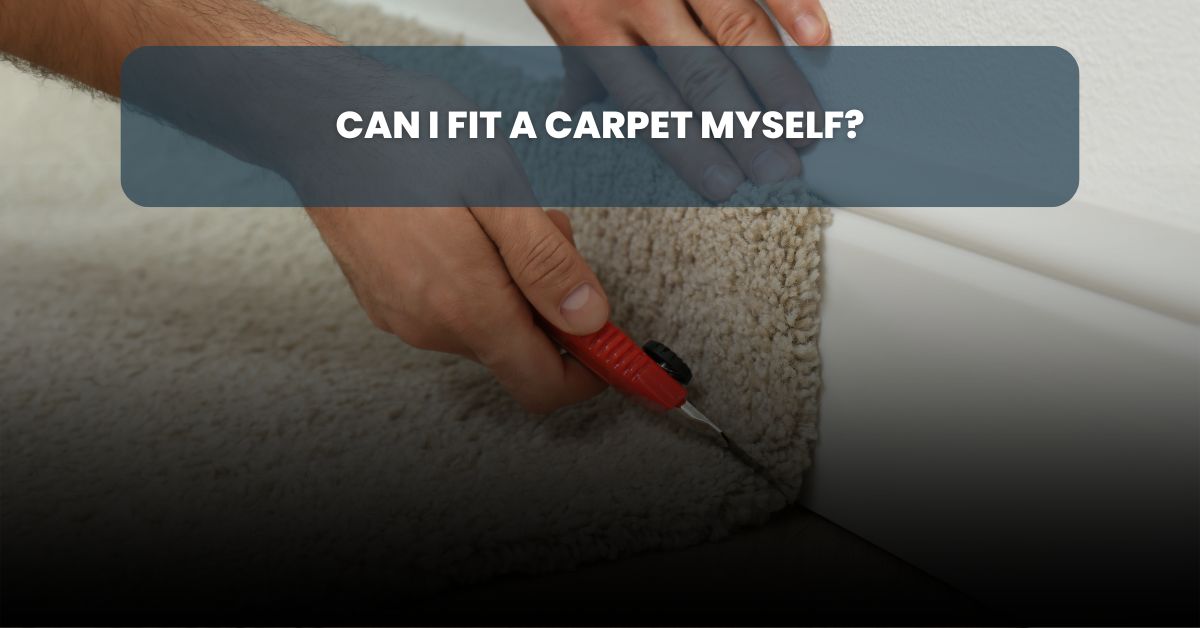
It is one of the most searched questions for homeowners planning a flooring upgrade: Can I fit a carpet myself and save money? The short answer is yes, for a simple room it is possible. But the full answer depends on the size of the space, the type of carpet you have chosen, and whether you have the tools and experience to do the job properly.
Carpet fitting looks straightforward from the outside. In reality, getting a clean, flat, crease-free result requires the right equipment, accurate measuring, and a good understanding of how carpet behaves when stretched and trimmed. A poorly fitted carpet will bubble, lift at the edges, and wear out significantly faster than one fitted by an experienced professional. Understanding the average lifespan of a carpet makes it clear just how much proper fitting affects how long your carpet lasts.
That does not mean DIY is always the wrong choice. For a small bedroom, a utility room, or a straightforward lounge with no awkward corners, a careful and patient homeowner can achieve a solid result. The key is knowing what you are taking on before you start, and understanding where the real risks lie.
This guide covers everything you need to make an informed decision. You will find a full breakdown of the tools and materials required, a step-by-step fitting guide for a basic room, an honest cost comparison between DIY and professional carpet fitting in London, the most common mistakes homeowners make, and a clear guide on when it makes more sense to bring in a professional. If you are also thinking about carpet prices and what the total cost of a new carpet looks like in the UK, we have covered that in detail too.
Can I Fit a Carpet Myself?
Yes, you can fit a carpet yourself in a standard rectangular room if you have the right tools, time, and patience. However, for stairs, large rooms, or premium carpets, professional carpet fitting in London will almost always deliver better results and protect your investment long term.
What Does Fitting a Carpet Actually Involve?
Fitting a carpet involves preparing the subfloor, installing gripper rods around the room perimeter, laying and securing underlay, cutting the carpet to size, stretching it tightly across the room using a knee kicker or power stretcher, and tucking the edges neatly against the walls. Each stage must be completed correctly to achieve a smooth, durable finish.
Before deciding whether to fit a carpet yourself, it is worth understanding exactly what the process involves from start to finish. Many homeowners assume carpet fitting is simply a case of rolling out the carpet and cutting it to fit. In reality, there are several stages that all affect the final result, and skipping or rushing any one of them leads to problems that are expensive and time-consuming to fix.
The full carpet fitting process
1. Preparing the subfloor
The floor beneath the carpet must be clean, dry, level, and free from protruding nails or screws. Any unevenness in the subfloor will telegraph through the carpet over time, causing lumps and uneven wear.
2. Fitting gripper rods
Thin strips of wood with angled pins, known as gripper rods, are nailed or glued around the perimeter of the room. These grip the carpet backing and hold the carpet taut once it has been stretched into place. They must be positioned at the correct distance from the wall.
3. Laying carpet underlay
Underlay is laid and stapled or taped to the subfloor before any carpet goes down. This is one of the most important stages of the process. Carpet underlay provides cushioning, improves insulation, and protects the carpet from below, significantly extending how long the carpet lasts. Fitting carpet without proper underlay is one of the most common and costly mistakes homeowners make.
4. Cutting and positioning the carpet
The carpet is rolled out and rough-cut to leave approximately 10cm of excess at every wall. Cutting too short at this stage means starting again with a new piece of carpet, which adds directly to your carpet installation cost.
5. Stretching the carpet
This is the stage most DIY fitters get wrong. The carpet must be stretched firmly and evenly across the room using a knee kicker and ideally a power stretcher before being hooked onto the gripper rods. Without proper stretching, the carpet will develop bubbles and ripples within months of fitting.
6. Trimming and tucking the edges
Once stretched and hooked, the excess carpet is trimmed with a carpet knife and tucked neatly into the gap between the gripper rod and the wall using a bolster chisel. Door thresholds are then fitted to finish off any open edges cleanly.
How room shape and size changes everything
A simple rectangular bedroom is the most forgiving room to carpet yourself. The moment you introduce bay windows, alcoves, chimney breasts, irregular angles, or doorways that open mid-room, the complexity increases significantly. Cuts must be precise, joins need to be hidden, and the pile direction must stay consistent across any seams. For most homeowners, these are the situations where the risk of a costly mistake outweighs any saving from doing the job yourself.
Room size also matters. Rooms wider than four metres will require a seam, since carpet is typically sold in four-metre widths. Creating an invisible seam is a skilled job that requires seaming tape, a seaming iron, and experience reading pile direction. A visible seam in the middle of a living room carpet significantly affects both the appearance and the lifespan of your carpet, as the seam area is a point of weakness that wears faster than the rest of the carpet.
What about fitting carpet on stairs?
Stairs are in a different category entirely. Each tread and riser must be fitted individually, the carpet must be precisely cut around spindles and newel posts, and the finish must be secure enough to handle the daily impact of foot traffic coming down with force. Poorly fitted stair carpet is also a safety risk. It is worth knowing that stairs significantly increase carpeting costs even for professionals, which gives a realistic picture of the skill and time involved. For most homeowners, stair fitting is a job best left to an experienced carpet fitter.
Can you reuse old underlay when fitting new carpet?
If you are replacing an existing carpet, you may be wondering whether the underlay beneath it can be reused. In some cases it can, but there are important factors to check first. Old underlay that has compressed, crumbled, or become damp will not support a new carpet properly and will shorten its life considerably. The full answer to whether you can lay new carpet over old underlay covers exactly what to look for before making that decision.
Tools and Materials You’ll Need to Fit a Carpet Yourself
Fitting a carpet yourself requires a range of specialised tools and materials to achieve a secure and professional result. Many DIY installations fail because homeowners underestimate the importance of using the correct equipment. Without proper tools, it becomes difficult to stretch, position, and secure the carpet correctly, which can lead to wrinkles, loose fitting, and reduced lifespan.
Below is a practical checklist of the essential tools needed for DIY carpet installation:
- Carpet knee kicker for positioning carpet edges
- Power stretcher for stretching carpet across the room
- Gripper rods or tack strips to hold the carpet in place
- Utility knife or carpet knife with a straight edge for accurate cutting
- Bolster chisel and hammer for tucking carpet edges neatly
- Tape measure and chalk line for accurate measurements
- Seaming tape and seaming iron for joining carpet sections
- Safety gloves and knee pads for protection during installation
One of the most important tools is the power stretcher. It is not optional. Many DIY carpet installations fail because only a knee kicker is used, which is not sufficient to stretch the carpet properly across the entire room. A power stretcher ensures the carpet is fitted tightly, reducing the risk of wrinkles and improving long term durability.
Accurate measuring is also critical before starting installation. Understanding how much to carpet a room helps ensure you purchase the correct amount of material and avoid unnecessary waste or additional costs.
While these tools can be hired, they require experience to use correctly. This is why many homeowners prefer professional carpet fitting London services, which ensure proper installation, better durability, and a high quality finish.
Step by Step How to Fit a Carpet Yourself
Fitting a carpet yourself in a basic rectangular room is possible if you follow the correct steps and use proper tools. This guide outlines the standard process used in UK homes, but it is important to understand that precision and technique are essential for a professional result.
Step 1 Measure the room accurately
Measure the length and width of the room and always order at least 10 percent extra carpet to allow for trimming and fitting adjustments. Accurate measurement helps avoid shortages and ensures proper coverage.
Step 2 Clear the room and remove old flooring
Remove all furniture, old carpet, underlay, and existing gripper rods. Ensure the floor surface is clean, dry, and ready for installation.
Step 3 Fit new gripper rods
Install gripper rods around the perimeter of the room, leaving a small gap between the wall and the rods. This gap allows the carpet edges to be tucked neatly for a clean finish.
Step 4 Lay and secure underlay
Lay the underlay evenly across the floor without overlapping. Tape the joins securely to prevent movement. Understanding the importance of carpet underlay helps ensure better comfort and long term durability.
Step 5 Roll out and position the carpet
Roll out the carpet across the room and roughly cut it, leaving around 10 centimetres of extra material along each wall. This extra material allows for accurate trimming later.
Step 6 Stretch and fix the carpet
Use a knee kicker to position the carpet and hook it onto the gripper rods. Work from the centre of the room outwards to remove wrinkles. For best results, a power stretcher should also be used to ensure the carpet is fully stretched.
Step 7 Trim and tuck the edges
Trim excess carpet using a carpet knife and carefully tuck the edges into the gap between the gripper rods and the wall. This creates a neat and secure finish.
Step 8 Install door bars and finish edges
Fit door bars or threshold strips at doorways to secure the carpet edges and provide a clean transition between rooms.
DIY carpet installation can work for simple rooms, but mistakes during fitting can affect durability and appearance. Many homeowners choose professional carpet fitting London services to ensure accurate installation, proper stretching, and long term performance.
How Much Does It Cost to Fit a Carpet Yourself vs Hiring a Professional?
Cost is one of the main reasons homeowners in London UK consider fitting carpet themselves. At first glance, DIY installation may seem cheaper, but once you factor in tools, materials, and potential mistakes, the total cost can be higher than expected.
DIY carpet fitting includes more than just buying the carpet. You need to consider carpet prices, underlay, gripper rods, door bars, and tool hire such as a power stretcher and knee kicker. In addition, mistakes during cutting or fitting can lead to wasted material and extra expenses.
Professional carpet fitting in London typically costs around £3 to £6 per square metre for labour, depending on the complexity of the job. While this adds to the initial cost, it ensures proper installation, reduces waste, and improves the lifespan of your carpet.
Room size also affects the total cost. Understanding how much to carpet a room helps homeowners estimate the full expense based on dimensions, material, and installation requirements. Some homeowners also compare options by exploring is it cheaper to lay flooring or carpet when planning their flooring upgrade.
DIY vs Professional Carpet Fitting Comparison
| Factor | DIY Carpet Installation | Professional Carpet Fitting |
|---|---|---|
| Cost | Lower upfront but higher hidden costs | £3 to £6 per m² labour plus materials |
| Tools | Must hire or buy tools | Included in service |
| Time | Time consuming and physically demanding | Quick and efficient |
| Risk | High risk of mistakes and wasted carpet | Low risk with expert installation |
| Finish Quality | May be uneven or loose | Clean, secure, and professional finish |
| Warranty | No guarantee | Often includes service guarantee |
DIY carpet installation can work for small and simple rooms, but hidden costs such as tool hire, wasted material, and re fitting can quickly add up. Professional installation provides better value by ensuring accuracy, durability, and a high quality finish.
Common DIY Carpet Fitting Mistakes to Avoid
Fitting carpet yourself can seem straightforward, but small mistakes can lead to poor results, reduced durability, and higher long term costs. Many DIY installations fail due to lack of experience, incorrect tools, or skipping essential steps. Understanding these common mistakes helps homeowners in London UK avoid costly problems.
Here are the most common DIY carpet fitting mistakes to avoid:
Not buying enough carpet: Always order at least 10 to 15 percent extra material to allow for cutting, trimming, and adjustments. Running short can delay installation and increase costs
Skipping or reusing worn underlay: Old or poor quality underlay reduces comfort and significantly shortens carpet lifespan. Proper underlay is essential for durability and support
Using only a knee kicker: A knee kicker alone is not enough to stretch carpet properly. Without a power stretcher, the carpet can develop wrinkles and loosen over time
Incorrect gripper rod placement: Improper positioning of gripper rods can cause uneven edges, lumps near walls, and poor carpet tension
Poor seam joins in large rooms: In wider rooms, incorrect joining techniques can create visible seams that affect the overall appearance of the carpet
Ignoring carpet pile direction: Carpet pile direction affects how light reflects on the surface. If installed incorrectly, the carpet may appear different shades from different angles
Fitting carpet on uneven or damp subfloors: Uneven or damp surfaces can damage the carpet and reduce its lifespan. Proper floor preparation is essential before installation
Poor carpet fitting can dramatically reduce durability and performance. Understanding the average lifespan of a carpet helps homeowners see how proper installation affects long term value. Many buyers also assume thicker carpets last longer, but understanding is thicker carpet always better helps avoid choosing the wrong carpet type for your needs.
Avoiding these mistakes improves carpet performance, but professional installation remains the most reliable way to ensure a secure fit and long lasting results.
When Should You Hire a Professional Carpet Fitter in London?
While DIY carpet fitting may work for small and simple rooms, many situations require professional installation to achieve the best results. Larger rooms over 4 metres wide often need precise joining, while stairs and irregular spaces such as alcoves or bay windows are difficult to fit correctly without experience.
Professional fitting is also recommended when using premium carpets such as wool or thick pile, where mistakes can be costly. For full property installations or rental properties, expert fitters ensure a consistent and high-quality finish in less time.
Working with a trusted london flooring company provides accurate measurements, expert advice, and reliable results. Many homeowners choose complete carpet and fitting services for convenience and durability. Professional carpet fitting London ensures your carpet is installed correctly and lasts longer, while carpet replacement services help upgrade worn flooring efficiently.
Get Professional Carpet Fitting in London Free Quote
While fitting a carpet yourself may work for small and simple rooms, professional installation delivers better results, longer carpet lifespan, and a more reliable finish. Many homeowners in London UK find that expert fitting is more cost effective in the long run by avoiding mistakes, wasted material, and re fitting costs.
London Carpets and Flooring Hub provides complete carpet-fitting services across London. Their team offers a convenient service where carpet samples are brought directly to your door, helping you choose the right style and material for your home. You also benefit from a free consultation and a price match guarantee, ensuring you get the best value.
Choosing a trusted london flooring provider means accurate measurements, professional installation, and long lasting results. If you are unsure which carpet to choose, you can explore choosing the perfect carpet for your home to make a more informed decision. Timing your installation can also make a difference, so it is helpful to understand what is the best time of year to replace carpet when planning your upgrade.
If you want a hassle free experience and a high quality finish, the best option is to work with professionals.
Get a Free Carpet Fitting Quote today and upgrade your flooring with expert installation.
Frequently Asked Questions: Fitting Carpet Yourself in the UK
Can I fit carpet without a knee kicker?
No, fitting carpet without a knee kicker is not recommended. A knee kicker helps position and secure the carpet onto gripper rods. However, even with a knee kicker, a power stretcher is still needed for proper tension and long term durability.
Do I need to remove old underlay before fitting new carpet?
Yes, in most cases old underlay should be removed. Worn underlay reduces support, comfort, and carpet lifespan. Installing new underlay ensures better performance and a longer lasting finish.
Is it hard to fit carpet on stairs yourself?
Yes, fitting carpet on stairs is difficult and requires skill. Stairs involve precise cutting and secure fitting to ensure safety. Most homeowners choose professional installation for stairs.
How long does it take to fit carpet in one room?
Fitting carpet in one room usually takes 2 to 4 hours for professionals. DIY installation can take significantly longer depending on experience and room complexity.
Do I need gripper rods if I’m fitting carpet on concrete?
Yes, gripper rods are still required even on concrete floors. They help hold the carpet in place and ensure a tight, secure fit along the edges.
What is the best carpet for DIY fitting?
Short pile and lightweight synthetic carpets are generally easier to install. Thicker carpets and wool carpets are more difficult to handle and require professional tools and experience.
How much does carpet fitting cost in London?
Carpet fitting in London typically costs between £3 and £6 per square metre. The total cost depends on room size, carpet type, and installation complexity. You can review carpet installation cost to estimate your budget.